Justice and the Politics of Difference by Iris Marion Young
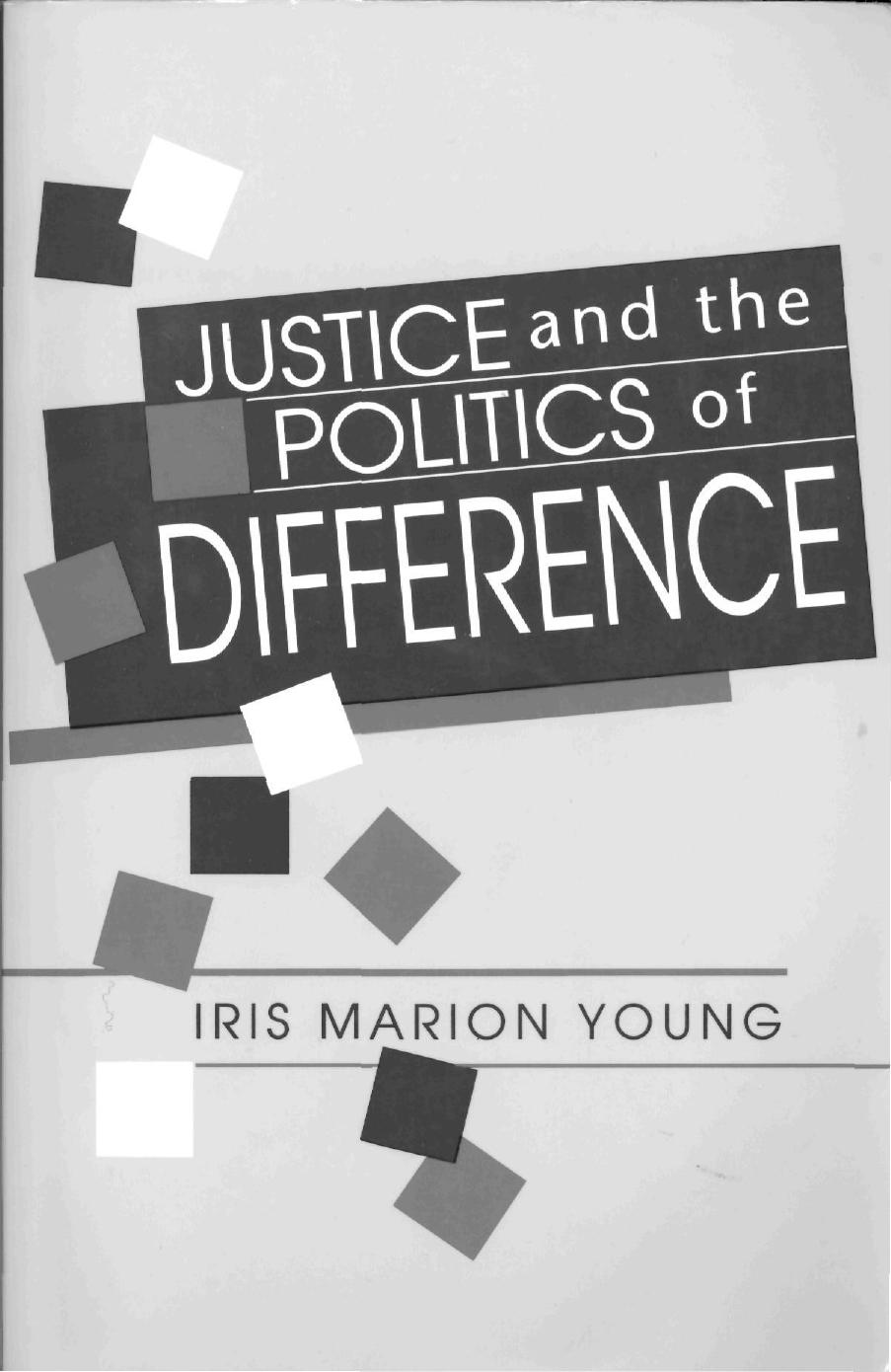
Author:Iris Marion Young [Young, Iris Marion]
Language: eng
Format: azw3, pdf
ISBN: 9781400839902
Publisher: Princeton University Press
Published: 2011-08-22T04:00:00+00:00
The “unconscious” contents remain here excluded but in a strange fashion; not radically enough to allow for a secure differentiation between subject and object, and yet clearly enough for a defensive position to be established—one that implies a refusal but also a sublimating elaboration. (Kristeva, 1982, p. 7)
The abject provokes fear and loathing because it exposes the border between self and other as constituted and fragile, and threatens to dissolve the subject by dissolving the border. Phobia is the name of this fear, an irrational dread that latches onto a material to which it is drawn in horrified fascination. Unlike fear of an object, to which one reacts with attempts at control, defense, and counteraction, phobic fear of the abject is a paralyzing and vertiginous dread of the unnameable. At the same time the abject is fascinating, bringing out an obsessed attraction.
Abjection, Kristeva says, is a peculiar experience of ambiguity. ‘Because, while releasing a hold, it does not radically cut off the subject from what threatens it—on the contrary, abjection acknowledges it to be in perpetual danger” (Kristeva, 1982, p. 9). The abject arises potentially in “whatever disturbs identity, system, order. What does not respect borders, positions, rules” (Kristeva, 1982, p. 4). Any border ambiguity may become for the subject a threat to its own borders. Separation between self and Other is the product of a violent break from a prior continuity. As constructed, the border is fragile, because the self experiences this separation as a loss and lack without name or reference. The subject reacts to this abject with loathing as the means of restoring the border separating self and other.
This account of the meaning of the abject enhances, I suggest, an understanding of a body aesthetic that defines some groups as ugly or fearsome and produces aversive reactions in relation to members of those groups. Racism, sexism, homophobia, ageism, and ableism, are partly structured by abjection, an involuntary, unconscious judgment of ugliness and loathing. This account does not explain how some groups become culturally defined as ugly and despised bodies. The symbolic association of some people and groups with death and degeneracy must in every case be explained socially and historically, and is historically variable. Even if abjection is a result of any subjects construction, nothing in the subject’s formation makes group loathing necessary. The association between groups and abject matter is socially constructed; once the link is made, however, the theory of abjection describes how these associations lock into the subject’s identities and anxieties. As they represent what lies just beyond the borders of the self, the subject reacts with fear, nervousness, and aversion to members of these groups because they represent a threat to identity itself, a threat to what Giddens calls the “basic security system.”
Xenophobia as abjection is present throughout the history of modern consciousness, structured by a medicalized reason that defines some bodies as degenerate. The role of abjection may increase, however, with the shift from a discursive consciousness of group superiority to such
Download
Justice and the Politics of Difference by Iris Marion Young.pdf
This site does not store any files on its server. We only index and link to content provided by other sites. Please contact the content providers to delete copyright contents if any and email us, we'll remove relevant links or contents immediately.
| Anthropology | Archaeology |
| Philosophy | Politics & Government |
| Social Sciences | Sociology |
| Women's Studies |
The remains of the day by Kazuo Ishiguro(8999)
Tools of Titans by Timothy Ferriss(8394)
Giovanni's Room by James Baldwin(7346)
The Black Swan by Nassim Nicholas Taleb(7129)
Inner Engineering: A Yogi's Guide to Joy by Sadhguru(6794)
The Way of Zen by Alan W. Watts(6614)
The Power of Now: A Guide to Spiritual Enlightenment by Eckhart Tolle(5781)
Asking the Right Questions: A Guide to Critical Thinking by M. Neil Browne & Stuart M. Keeley(5775)
The Six Wives Of Henry VIII (WOMEN IN HISTORY) by Fraser Antonia(5515)
Astrophysics for People in a Hurry by Neil DeGrasse Tyson(5189)
Housekeeping by Marilynne Robinson(4447)
12 Rules for Life by Jordan B. Peterson(4304)
Ikigai by Héctor García & Francesc Miralles(4274)
Double Down (Diary of a Wimpy Kid Book 11) by Jeff Kinney(4272)
The Ethical Slut by Janet W. Hardy(4251)
Skin in the Game by Nassim Nicholas Taleb(4248)
The Art of Happiness by The Dalai Lama(4130)
Skin in the Game: Hidden Asymmetries in Daily Life by Nassim Nicholas Taleb(4006)
Walking by Henry David Thoreau(3962)
